
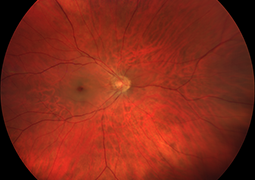


Introduction: Retinal artery occlusion (RAO) is a vascular occlusive disorder and an acute condition in ophthalmological practice.
Purpose: To evaluate the effectiveness of treatment approaches used at our department in patients with RAO, particularly their impact on the resulting central visual acuity of the affected eye. Furthermore, to determine how many patients would meet the time window for intravenous thrombolysis (IVT) administration in the case of central retinal artery occlusion (CRAO).
Material and Methods: This retrospective study included all the patients diagnosed with CRAO and BRAO (branch retinal artery occlusion) who received systemic treatment with intravenously administered vasodilators (Procaine®) at our department between 01/2020 and 08/2025. We monitored the time delay to examination, the type of healthcare facility upon first contact, the type of therapy, the duration of symptoms before the initiation of treatment, and risk factors. We evaluated the change in central visual acuity (CVA) before treatment and immediately after completion of therapy upon discharge from hospital.
Results: The study sample consisted of 73 eyes (51 with CRAO and 22 with BRAO). No significant improvement in CVA was observed after the administration of 0.2% procaine hydrochloride (Procaine®): the mean change in CVA before and after treatment was 0.045 in the BRAO group and 0.078 in the CRAO group. No significant association was found between CVA change and the number of administered Procaine doses. The average time from the onset of symptoms to examination at our ophthalmology clinic was 33.5 hours in the BRAO group and 28.4 hours in the CRAO group. The time window for potential IVT administration was met by 2 patients with BRAO (9%) and 14 patients with CRAO (27%).
Conclusion: We did not demonstrate any potential therapeutic effect of intravenously administered 0.2% procaine hydrochloride. Our results confirmed the need to establish a protocol for IVT administration.